For all the capital flowing into ocean tech, blue bonds and marine conservation, modern finance still has a major blind spot: it continues to treat coastal and island states as climate victims rather than strategic assets. Yet, as deep tech accelerates and markets search for the next frontier of resilient growth, the most overlooked dataset isn’t synthetic, it’s ancient: a vast body of marine intelligence refined over centuries in biocritical regions from Japan’s archipelago to Small Island Developing States (SIDS) across the Pacific and Caribbean.

Native science sits at the core of the Green Renaissance, a term I use for the alignment of ecological intelligence with modern technology, and the possibility of a more regenerative future. The bioeconomy—spanning food, materials, health, energy and ocean industries—is already valued at around US$4trn and could reach US$30trn by 2050. More than half of global GDP is moderately or highly dependent on nature and its services. Yet the knowledge that governs those systems—from biodiversity insights to long-standing ecological practices—remains largely absent from the strategies shaping markets and innovation.

This is region-specific, empirically tested systems knowledge held by coastal populations—long-range pattern recognition, resource logic and biological engineering practiced over thousands of years. Scientific in method, cultural in expression and global in relevance, it remains one of the most valuable and least-priced assets on the planet. Overlooking it is an innovation bottleneck, a market inefficiency and a strategic error in an era when the bioeconomy depends on evolutionary intelligence that cannot be synthesised in labs.

The irony is that the very systems investors now chase — resilience, efficiency, circularity — were already advanced and practiced by maritime societies, whose expertise was never recognised in formal economic frameworks. Consider what marine and amphibious biodiversity has already unlocked. Salamanders can regenerate limbs and spinal tissue, and their biology is now informing early research in human nerve repair. Engineers study squid propulsion to develop prosthetics with fluid movement that current robotics cannot replicate. Sharkskin’s hydrodynamic properties inspired automotive drag reduction and competitive swimsuit design. Marine cone snails from Indo-Pacific reefs produce the compounds behind Prialt, a pain medication up to 1,000 times more powerful than morphine. Invasive lionfish are being processed into leather alternatives. Seaweed is replacing petroleum-based plastics in packaging and textiles.

The modern economy is only now chasing what maritime societies mastered long ago: resource efficiency, circular design and resilience tuned to living systems. Yet the populations closest to these systems remain excluded from value chains. Ama divers in Japan, a group of traditional free-divers who have been working coastal waters for more than 2,000 years, detect changes in ocean temperature and species behaviour years before satellite data confirms the shifts. They are frontline monitoring systems for marine health, yet their observations rarely inform the research that receives funding. We spend billions addressing challenges that maritime communities have already solved: mangrove-based coastal protection, polyculture aquaculture eliminating disease without antibiotics, coral restoration, natural fibre composites from marine organisms, distributed water governance in coastal systems and architecture requiring no external energy inputs. What was once foundational knowledge is now repackaged and resold at a premium.

Why the bioeconomy needs maritime intelligence

As artificial intelligence (AI) accelerates into marine spaces, frontier technologies depend on the very logic that coastal populations have refined for centuries: novel data inputs, unconventional system maps, edge-case environments, evolutionary logic and adaptive feedback loops. This is precisely the architecture of maritime intelligence. No one understands complex marine systems like societies that have survived inside them for generations. If deep tech wants resilience, if synthetic biology seeks direction, if investors want asymmetric upside, this provides the competitive advantage.

AI can accelerate recognition, but it cannot generate ecological memory: the pattern intelligence preserved through generations of observation in coastal waters. Maritime populations offer long-term resource management strategies, low-waste production systems, biocultural engineering frameworks and resilience designs that outperform many modern technologies.

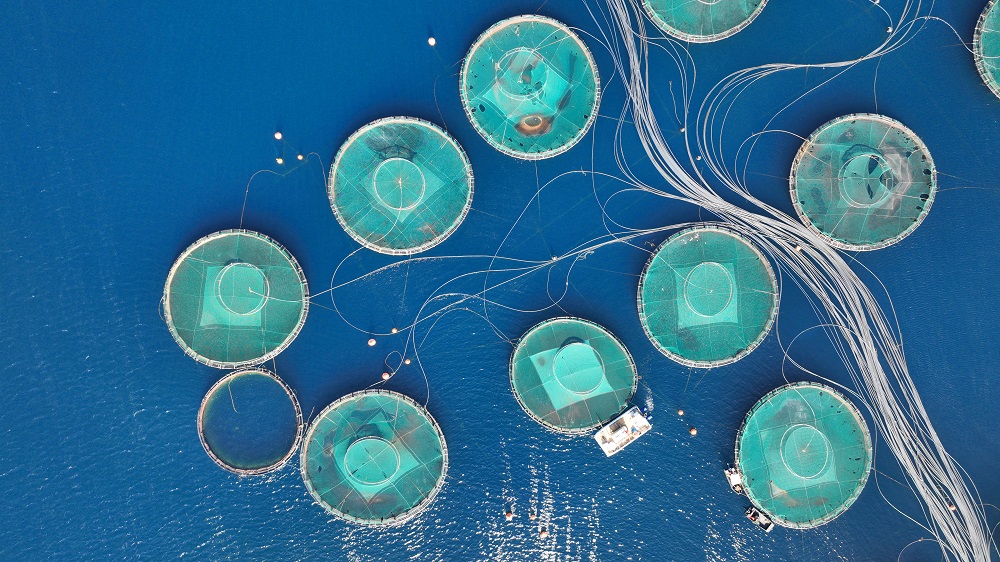
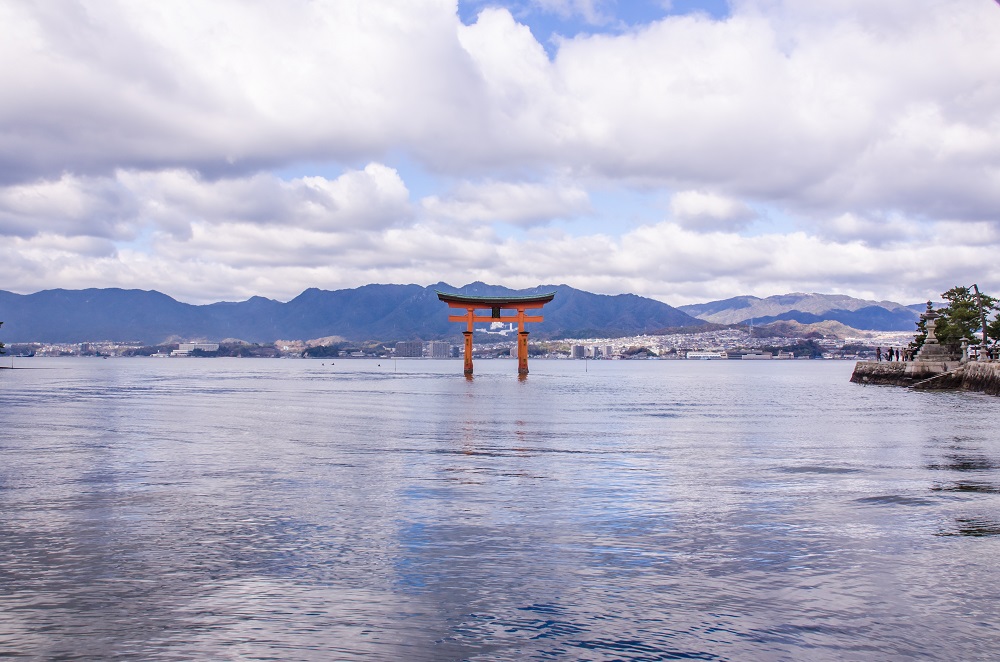
The most underpriced asset class is the cultural ecological intelligence of people in biocritical ocean states. This includes precise, measurable techniques such as traditional aquaculture systems, multi-species marine farming, natural adhesives from ocean organisms and medicinal botanicals from reef systems. Biocritical regions span from the Amazon to Sri Lanka — where the recent floods and the profound loss felt across the country have been a reminder of how quickly conditions can change in places grounded in deep ecological and cultural knowledge — to Japan’s 6,800-plus islands. Many of these places still steward centuries-old systems—called satoumi in Japan—that braid together ocean and human management, and their marine-based materials science now informs the frontiers of circular manufacturing, thermal-regulating coastal architecture and modern marine-management models. These methods have supported human survival in some of the planet’s most complex environments. Reviving these practices is an investment in durability, improved margins and cross-sector innovation.

Coastal governance models remain relevant to modern aquaculture. Architecture principles reduce external energy inputs. Longevity systems in Okinawa are rooted in marine dietary intelligence. Japan’s ability to blend ecological logic with robotics, biotechnology, advanced materials, and precision manufacturing shows how maritime systems can guide the bioeconomy by updating the intelligence that sustained them for generations.

SIDS such as Fiji, Palau and the Maldives hold concentrations of biodiversity found nowhere else on Earth, offering pharmaceutical compounds, biomimetic designs and adaptive strategies with commercial applications worth billions. Caribbean states possess reef systems and coastal management practices developed under conditions that would collapse modern industrial operations. These regions lack capital, and investors routinely undervalue the economic potential of local knowledge and capabilities, opening the door to models that extract more than they develop.

The real vulnerability and opportunity

The integration of maritime intelligence influences risk modelling, infrastructure, supply chains, food security, materials engineering and national competitiveness. Markets respond to stability, and coastal knowledge strengthens the foundations on which stability depends. Investors may debate climate change, but they cannot ignore supply chain volatility in seafood and marine supplies, resource scarcity, import dependence for aquaculture inputs, energy security from offshore systems, advanced manufacturing using marine biotechnology, economic resilience in coastal infrastructure and national competitiveness in the blue economy. Maritime intelligence offers cost-cutting, risk reduction and infrastructure improvements that outperform many conventional systems built in the last century.

We are entering a period in which human consciousness, ecological logic and AI evolve together in ocean spaces. Maritime intelligence functions as an operating system that modern economies have failed to install. It provides centuries of resource-efficiency models and durability frameworks that contemporary marine engineering is only beginning to rediscover. Research shows this intelligence cannot be extracted or reconstructed from the outside. Without the participation of knowledge holders, the system loses fidelity. For investors, this is not a hurdle. It is a filter that determines who can build real value in ocean markets.

The greatest risk investors face is incomplete information—the belief that the only intelligence worth funding was developed in the last 200 years. Maritime intelligence from biocritical ocean states is an untapped data architecture for the next generation of bioeconomy and regenerative breakthroughs. Ignore it, and we repeat the blind spots of industrial extraction. Integrate it with frontier science, AI, synthetic biology and materials engineering, and we unlock innovation with far stronger fundamentals.The Green Renaissance is not just an environmental ideal; it’s the next frontier of value creation. When ecological intelligence informs advanced technology, innovation compounds, risk declines and markets become more resilient. In this version of the future, the smartest players aren’t the ones extracting the most, but the ones investing in systems built to last.


Léonie Weerakoon is a human ecologist, investor and founder of Kinetik, a global research and intelligence platform drawing on ecological knowledge from more than 60 biocritical nations to inform the next generation of nature-aligned innovation.

Sign up to the Back to Blue monthly newsletter to receive latest news and research from the programme.